Nov 1st, The Crone & Halloween
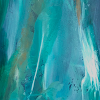
Between This World and The Otherworld reigned the Cailleach Beara, the wise old crone, the woman of Winter - she signalled the beginning of Winter and was the goddess that ruled until Spring. When I painted The Cailleach is was a response to a prompt ‘don’t use blue or orange again’.. Determined to rebel I couldn’t resist stamping my ground…and in my mind was the fierce power of the Cailleach. I love the stories of her role in shaping the land and the seasons..her significance in a symbol of death and rebirth.
This year, more than most, Ireland has been promoting it’s place as ‘the home of Halloween’, claiming the Indigenous roots of ancient beliefs, customs and how the Irish lived with the land.
The year has 4 main festivals that shifted with the energies of the seasons, light, growth harvest and rest. Samhain (SAH-win) (leading to Winter), Imbolc (leading to Spring), Bealtaine (leading to Summer) and Lughnasadh (Harvest). Samhain was carried by immigrants to North America where it was adapted over time. (read link below)
The festivals and rituals that take place in Ireland are coming back as the Irish begin to reclaim and talk more about their ancestral teachings that had been diminished during the rule of the British Empire - these traditional festivals include honouring the dead (placing candles in windows, setting an empty place at the table), fires and bonfires (symbolising protection for the winter and carrying home embers for home to renew the home’s spirit) or wearing a disguise (masks and costumes to confuse wandering spirits at a liminal time when the veil to The Otherworld was thin).
One of the most notable adaptation was the carving of Turnips with ghoulsih and scarey faces to leave at the door with a candle inside - they were called JackO’Lanterns…The light to guide good spirits and the face to scare away dangerous ones. IRISH TIMES article
For me, the story of the Cailleach and the blackthorn stick takes me to Cork, where my Grandfather’s farm (The Grove) is located. The site of the Hag of Beara (visited by many tourists and pilgrims alike) is close to the farm…and perhaps now I connect the significance of his own walking stick that I remember well - it was a hard blackthorn stick with dangerous spikes that would injure anyone who would have been unlucky enough to get in it’s way. I also know the pain of carving a Turnip - it was not for the faint hearted!